

Intel’s Strongest Quarter in 15 Years Didn’t Move the Stock—Here’s What Wall Street Is Really Pricing In
Intel delivered its fastest revenue growth since 2011, crushed earnings expectations, and raised guidance. Yet the post-earnings rally quickly faded. The market’s reaction suggests investors are no longer judging Intel by quarterly results—they’re pricing a much bigger question about the future of its foundry business.
By Vikram Singh
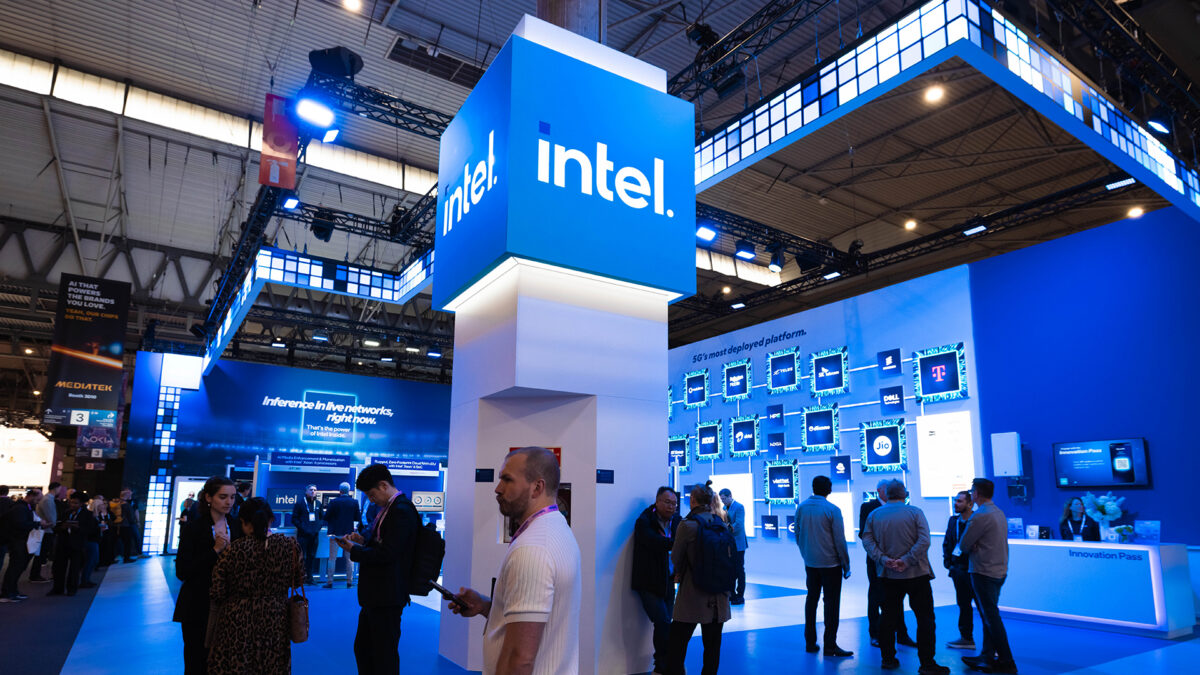
Intel delivered one of its strongest quarterly reports in more than a decade, but investors reacted as if the company had merely met expectations.
Revenue surged 25% year-over-year to $16.1 billion, marking Intel’s fastest quarterly growth since 2011. Adjusted earnings per share reached $0.42, more than double Wall Street’s estimate of $0.21. The Data Center and AI business grew an impressive 59%, operating cash flow reached $7 billion, and management raised full-year capital expenditure guidance while forecasting another quarter of above-consensus revenue.
On paper, these are exactly the kinds of numbers investors typically reward.
Instead, Intel’s stock jumped sharply after earnings before surrendering much of those gains within hours.
The disconnect reveals something important.
For the first time in years, Intel is no longer being evaluated as a turnaround story. It is increasingly being valued as an execution story.
That distinction matters.
The Easy Part of the Turnaround May Already Be Complete
Over the past two years, Intel has accomplished something many investors once considered unlikely.
The company stabilized its core PC business, restored growth in the server market, benefited from a resurgence in enterprise CPU demand driven by artificial intelligence workloads, improved gross margins, generated meaningful operating cash flow, and rebuilt credibility under CEO Lip-Bu Tan.
Those achievements explain why Intel shares have dramatically outperformed from their lows.
The market is no longer asking whether Intel can survive.
It is asking whether Intel can justify becoming a premium semiconductor company again.
Those are very different questions.
The Foundry Business Has Become Intel’s Valuation Engine
Most headlines focused on Intel’s earnings beat.
Far fewer discussed the single business segment that could determine the company’s valuation over the next decade.
Intel Foundry generated $5.8 billion in revenue during the quarter, representing 31% year-over-year growth.
At first glance, those numbers appear encouraging.
However, the overwhelming majority of that revenue still comes from Intel manufacturing chips for itself.
External foundry revenue—the business designed to compete directly with Taiwan Semiconductor Manufacturing Company (TSMC)—remains relatively small.
Even after revenue growth, the foundry division reported an operating loss of roughly $2.1 billion.
That means Intel’s manufacturing business is still consuming capital faster than it is creating economic value from third-party customers.
The distinction is critical because Wall Street isn’t looking for Intel to become a better chip designer.
It wants Intel to become a commercially successful contract manufacturer.
Until that happens, investors are likely to remain cautious despite improving quarterly fundamentals.
Intel’s Accounting Loss Was Misleading—But Investors Looked Past It
One headline number created confusion immediately after earnings.
Intel reported an approximately $11 billion GAAP net loss.
At first glance, that appears catastrophic.
In reality, it was largely the result of a $12.5 billion non-cash mark-to-market accounting adjustment tied to the U.S. government’s equity interest under the CHIPS Act agreement.
Because the government’s stake is revalued based on Intel’s rising share price, a stronger stock ironically produces a larger accounting loss.
No cash left Intel’s balance sheet.
Operations continued improving.
Professional investors quickly recognized this accounting effect and instead focused on operational performance, margins, cash generation, and guidance.
That explains why the accounting loss had little lasting impact on market sentiment.
Intel Is Entering a New Phase of Investor Expectations
Perhaps the most significant takeaway from this quarter isn’t what Intel reported.
It’s how investors responded.
During the early stages of a turnaround, companies often receive higher valuations simply for producing evidence that conditions are improving.
Eventually that changes.
Once confidence returns, investors demand proof that future growth will justify the higher valuation.
Intel appears to have reached that transition point.
Good earnings are no longer enough.
Future stock performance increasingly depends on management delivering milestones that extend beyond quarterly financial results.
Among those milestones are:
Winning meaningful external foundry customers.
Successfully ramping Intel 18A into high-volume manufacturing.
Demonstrating progress toward Intel 14A development.
Narrowing foundry operating losses while maintaining manufacturing investments.
Showing that Intel can attract customers who historically relied on TSMC or Samsung.
Quarterly earnings alone are unlikely to answer those questions.
Capital Spending Remains the Biggest Strategic Bet
Intel also increased its full-year capital expenditure outlook to more than $20 billion.
That reflects management’s confidence but also highlights the enormous financial commitment required to build a world-class semiconductor manufacturing business.
Unlike software companies, semiconductor manufacturers cannot grow without continually investing in new fabrication facilities, advanced packaging technologies, and next-generation process nodes.
Those investments pressure free cash flow in the short term.
Management is effectively asking investors to tolerate several more years of elevated spending in exchange for potentially much larger competitive advantages later in the decade.
Whether that trade proves successful depends almost entirely on customer adoption.
Factories alone do not create shareholder value.
Customers do.
Why the Market Reacted So Differently This Time
The muted post-earnings reaction suggests investors believe much of Intel’s operational recovery is already reflected in the share price.
Instead of rewarding historical improvements, the market is attempting to estimate the probability of Intel becoming a credible alternative to TSMC in advanced manufacturing.
That is a significantly harder question.
It involves technology execution, customer relationships, geopolitical considerations, manufacturing yields, pricing power, and billions of dollars in future investment.
Each quarterly earnings report now serves less as a scorecard for Intel’s recent performance and more as evidence supporting—or challenging—that long-term thesis.
The Bottom Line
Intel’s second-quarter results confirmed that the operational turnaround is real.
Revenue growth reached levels not seen in fifteen years. Profitability exceeded expectations. AI-related demand continues strengthening the company’s core businesses, and management remains confident enough to increase investment despite an uncertain macroeconomic environment.
However, the investment debate has fundamentally changed.
Intel no longer needs to convince investors that it can recover.
It needs to prove that its foundry strategy can evolve from an internally focused manufacturing operation into a globally competitive contract business capable of attracting major external customers.
That transition—not quarterly earnings beats—is likely to determine whether Intel’s next phase creates another leg higher for shareholders or marks the point where expectations finally outrun execution.
Continue Reading: Wondering whether Intel still offers the best opportunity in AI semiconductors? Read our in-depth research on five AI chip stocks, including Nvidia, TSMC, Broadcom, Micron, and Qualcomm, and see how their long-term outlook compares with Intel.
Disclaimer
This content is for educational and informational purposes only. It is not financial advice. Stratton Journal does not recommend any specific investment or trading strategy.