
Oil Climbs Above $90 on Middle East Escalation, Lifting Energy Stocks and Inflation Risks
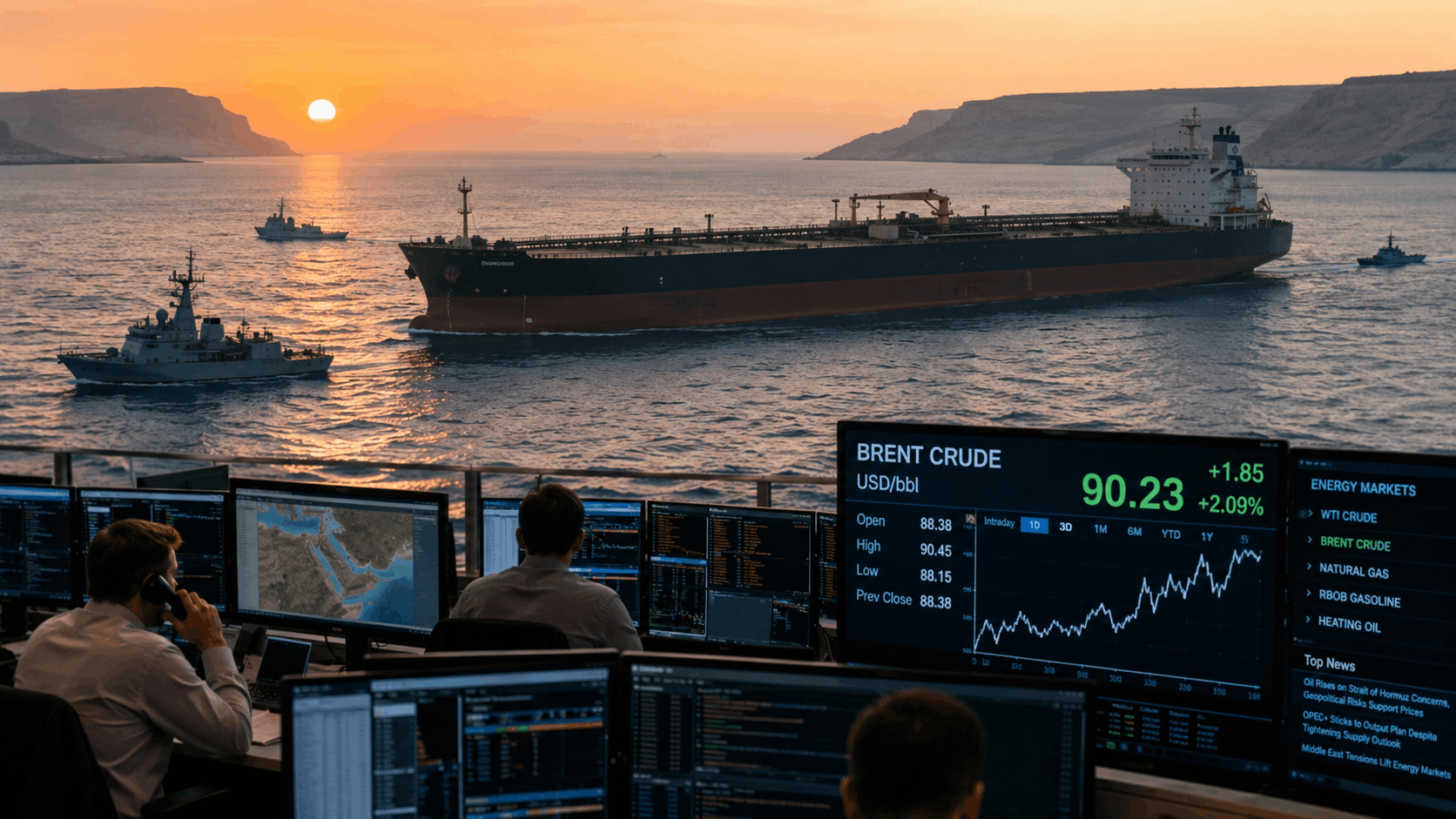
Brent crude rose above $90 a barrel as escalating U.S.–Iran tensions heightened concerns over potential supply disruptions through the Strait of Hormuz. The rally boosted energy and defense shares while increasing pressure on airlines, transportation companies, and inflation-sensitive sectors as investors reassessed the global economic outlook.
Key Takeaways
Brent crude climbed above $90 per barrel, while WTI traded around $84.68 amid escalating geopolitical tensions.
Markets are pricing in a higher risk premium over concerns that oil shipments through the Strait of Hormuz could be disrupted.
Energy producers, oilfield services companies, and defense contractors were among the sectors expected to benefit.
Airlines, cruise operators, transportation firms, and other fuel-intensive industries face higher operating costs.
Sustained higher oil prices could complicate the inflation outlook and influence expectations for future Federal Reserve policy.
What Happened
Oil prices rallied sharply on July 20 after escalating tensions between the United States and Iran renewed concerns over the security of energy supplies in the Middle East. Brent crude futures traded above $90 per barrel, while West Texas Intermediate (WTI) climbed to around $84.68, as traders incorporated a larger geopolitical risk premium into energy markets.
The move was driven largely by fears that any disruption to shipping through the Strait of Hormuz—a key transit route for global crude exports—could tighten supplies even if physical production remains unchanged. Shipping activity in the region has already attracted heightened market scrutiny as investors monitor developments.
Why It Matters
The oil rally extends well beyond the energy sector. Higher crude prices typically feed into gasoline, diesel and jet fuel costs, increasing transportation and manufacturing expenses while adding upward pressure to consumer inflation.
Persistently elevated oil prices could complicate the Federal Reserve's efforts to bring inflation under control, potentially influencing market expectations for future interest rate decisions. Rising energy costs can also pressure corporate profit margins and reduce consumer spending, making oil one of the most closely watched macroeconomic indicators during periods of geopolitical uncertainty.
Key Details
Brent crude traded around $90.79 per barrel.
WTI crude traded near $84.68 per barrel.
Approximately one-fifth of global oil trade normally passes through the Strait of Hormuz.
Markets are pricing in a geopolitical risk premium amid concerns over possible supply disruptions.
Energy producers generally benefit from stronger realized crude prices.
Pipeline operators are less directly exposed to commodity price volatility than upstream producers.
Oilfield services companies could benefit if sustained higher prices encourage increased drilling activity.
Fuel-intensive industries may experience margin pressure as energy costs rise.
Market Impact
The strongest gains are likely to be concentrated among integrated oil companies, exploration and production firms, oilfield service providers and, to a lesser extent, pipeline operators. Defense contractors may also attract investor interest amid heightened geopolitical uncertainty.
Conversely, airlines, cruise operators, trucking companies, logistics providers, chemical manufacturers and consumer discretionary businesses may face increased cost pressures from higher fuel and energy prices. Investors are also expected to monitor Treasury yields, inflation expectations and broader equity market performance as energy prices remain elevated.
Conclusion
The surge in Brent crude above $90 underscores how quickly geopolitical tensions can reshape global financial markets. While no significant physical supply disruption has occurred, the growing risk surrounding the Strait of Hormuz has prompted investors to reprice energy markets and reassess inflation, corporate earnings and monetary policy expectations. The duration of the rally will largely depend on whether geopolitical tensions ease or continue to threaten one of the world's most critical energy shipping routes.
Disclaimer
This content is for educational and informational purposes only. It is not financial advice. Stratton Journal does not recommend any specific investment or trading strategy.