
Safe-Haven Buying Pushes Gold Higher Before Federal Reserve Policy Meeting
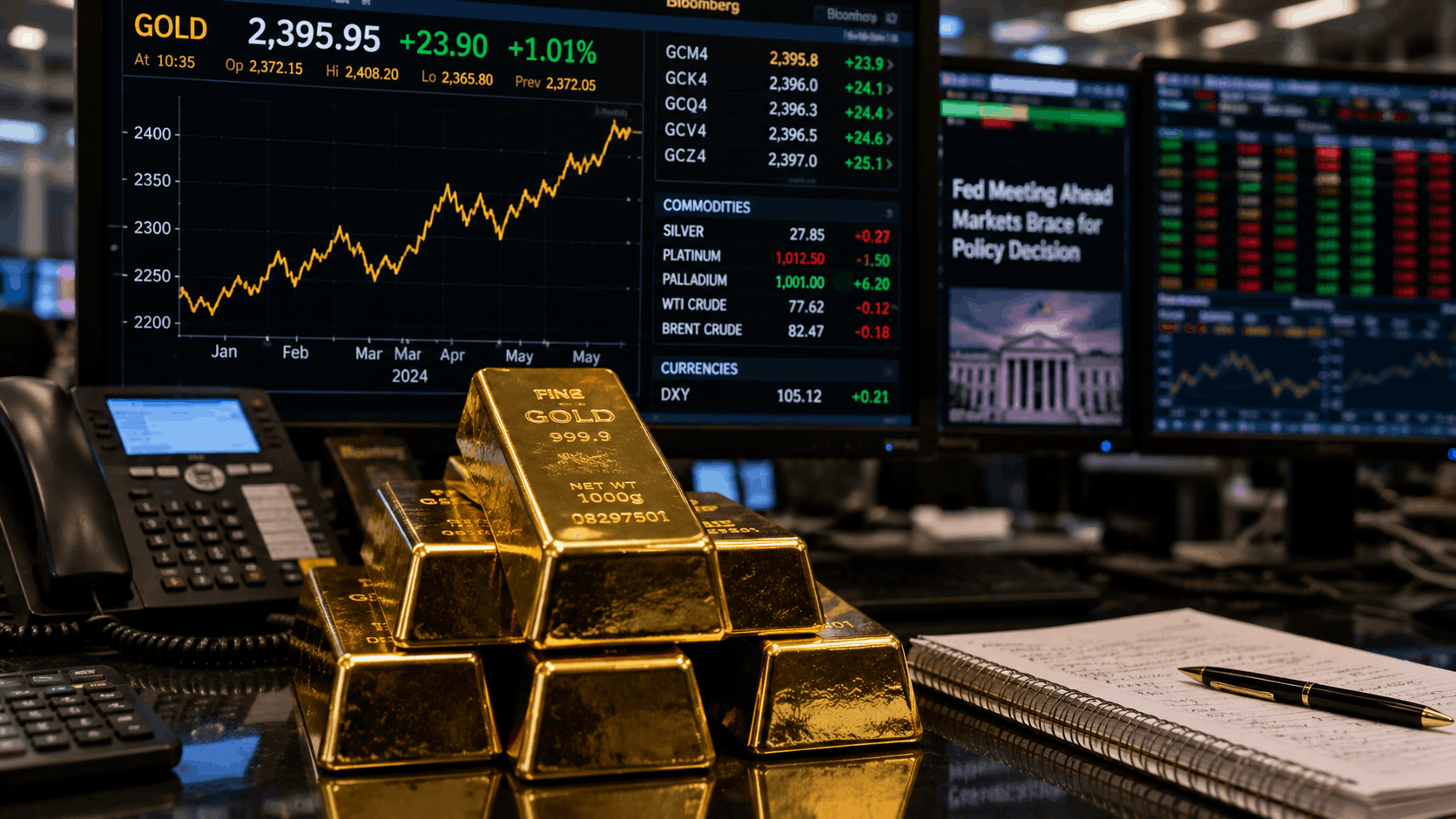
Gold climbed to its highest level in roughly two weeks on July 22 as escalating tensions in the Middle East boosted demand for safe-haven assets, while investors also positioned ahead of the upcoming U.S. Federal Reserve policy meeting. Rising oil prices and technical buying added support despite a firmer U.S. dollar and elevated Treasury yields.
Key Takeaways
Gold reached a two-week high as geopolitical tensions increased demand for defensive assets.
Investors are monitoring the upcoming Federal Reserve meeting for interest-rate and policy guidance.
Higher oil prices reinforced inflation concerns, supporting demand for bullion as a hedge.
Technical buying contributed to the rally despite a stronger U.S. dollar and higher Treasury yields.
Market participants continue to watch broader precious metals and ETF flows for signs of institutional positioning.
What Happened
Gold prices advanced to their highest level in approximately two weeks on July 22 as investors increased allocations to safe-haven assets amid heightened geopolitical tensions in the Middle East and ahead of the U.S. Federal Reserve's upcoming policy meeting.
According to Reuters, renewed concerns over regional instability, stronger inflation expectations fueled by rising crude oil prices, and technical buying helped support bullion prices even as the U.S. dollar remained relatively firm.
The move reflected growing investor caution over potential supply disruptions, inflation risks, and uncertainty surrounding the Federal Reserve's next policy decisions. While higher Treasury yields and a stronger dollar typically reduce the appeal of non-yielding assets such as gold, geopolitical uncertainty often increases demand for capital preservation, offsetting those headwinds.
Why It Matters
Gold is widely regarded as a benchmark safe-haven asset and plays an important role in institutional portfolio management during periods of elevated uncertainty.
The latest rally highlights the interaction between geopolitical developments, inflation expectations, and monetary policy. Investors are assessing whether persistent geopolitical risks and higher energy prices could keep inflation elevated and influence the Federal Reserve's policy outlook.
The performance of gold also has broader implications for mining companies, commodity exchange-traded funds, central bank reserve strategies, and diversified investment portfolios seeking protection against market volatility.
Key Details
Geopolitical Tensions
Escalating tensions in the Middle East increased demand for defensive assets as investors evaluated the potential impact of regional conflict on global markets and energy supplies.
Oil Prices and Inflation
Higher crude oil prices reinforced inflation concerns, supporting demand for gold as an inflation hedge. Rising energy costs can influence expectations for future monetary policy and contribute to broader market volatility.
Federal Reserve Outlook
Attention remains focused on the upcoming Federal Reserve policy meeting, where investors will look for signals on interest rates, inflation, and the future path of monetary policy. Expectations surrounding the Fed continue to be a key driver of gold prices.
Technical Momentum
Reuters reported that technical buying also contributed to the advance, with traders responding to bullish price momentum and key chart levels.
Broader Precious Metals
Market participants also monitored silver, platinum, and palladium, which often respond to shifts in investor sentiment as well as industrial demand fundamentals.
Market Impact
The move in gold underscores increasing demand for defensive assets as investors navigate geopolitical uncertainty and macroeconomic risks.
Continued strength in bullion prices could improve sentiment toward gold mining companies, royalty firms, and precious metals investment funds. At the same time, institutional investors will continue to monitor Treasury yields, U.S. dollar movements, exchange-traded fund flows, and central bank purchases for confirmation of broader demand trends.
Future price direction is likely to remain sensitive to geopolitical developments and signals from Federal Reserve policymakers regarding inflation and interest rates.
Conclusion
Gold's rise to a two-week high reflects growing investor demand for portfolio protection as geopolitical tensions and uncertainty over U.S. monetary policy dominate financial markets.
While higher Treasury yields and a stronger dollar remain traditional headwinds for bullion, the latest move illustrates how safe-haven demand can outweigh those pressures during periods of heightened uncertainty. Investors are now awaiting Federal Reserve guidance and further geopolitical developments for direction across precious metals and broader financial markets.
Disclaimer
This content is for educational and informational purposes only. It is not financial advice. Stratton Journal does not recommend any specific investment or trading strategy.