
The Complete Guide to Insider Buying, Insider Selling and SEC Form 4 Filings
Insider trading disclosures offer investors a rare glimpse into the actions of corporate executives, directors and major shareholders. While insider buying is often viewed as a sign of confidence, insider selling requires broader context, including SEC filing details, Rule 10b5-1 trading plans and company fundamentals, before drawing conclusions.
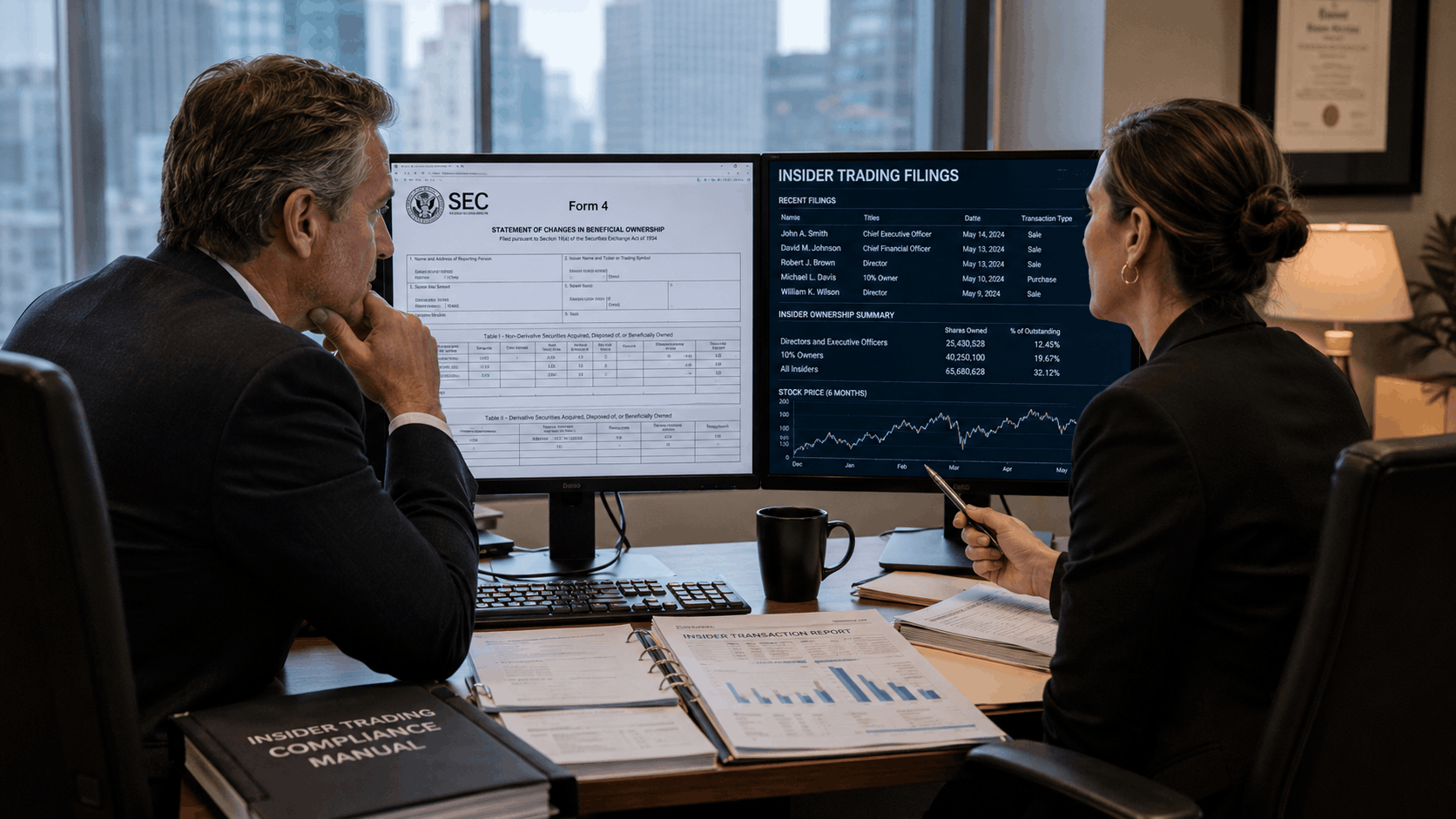
Key Takeaways
Corporate insiders must report most securities transactions through SEC Forms 3, 4 and 5.
Open-market insider purchases are generally viewed as stronger positive signals than insider sales.
Insider selling often occurs for reasons unrelated to company performance, including diversification, taxes and prearranged trading plans.
Rule 10b5-1 trading plans help executives sell shares under predetermined schedules while complying with SEC regulations.
Insider transactions should always be evaluated alongside earnings, valuation, cash flow and broader business fundamentals.
What Happened
Insider trading disclosures remain one of the most closely monitored corporate governance indicators for investors seeking insight into executive confidence and shareholder alignment.
Corporate officers, directors and significant shareholders are required to disclose most transactions involving company securities through filings with the U.S. Securities and Exchange Commission (SEC). These filings provide transparency into purchases, sales, option exercises, restricted stock awards and other ownership changes.
While legal insider trading is permitted under SEC rules, illegal insider trading occurs when individuals trade while in possession of material nonpublic information. Understanding the distinction is essential when interpreting insider activity.
Why It Matters
Insider transactions can provide valuable insight because company executives often have a deep understanding of their business, financial condition and long-term strategy.
However, professional investors rarely interpret insider activity in isolation. Instead, they evaluate the size of a transaction, whether it was discretionary or part of a Rule 10b5-1 trading plan, the insider's ownership stake and the company's broader financial performance.
Insider buying may indicate confidence in a company's future, while insider selling is frequently driven by personal financial planning rather than concerns about business prospects.
Key Details
Who Qualifies as an Insider?
Under U.S. securities law, insiders generally include:
Chief Executive Officer (CEO)
Chief Financial Officer (CFO)
Executive officers
Members of the board of directors
Beneficial owners of more than 10% of voting securities
SEC Reporting Forms
Form 3
Initial ownership disclosure after becoming an insider.
Form 4
Reports most insider transactions, including purchases, sales, option exercises and stock awards.
Generally filed within two business days.
Form 5
Annual filing for certain exempt or previously unreported transactions.
Common Insider Transactions
Open-market purchases
Open-market sales
Stock option exercises
Restricted Stock Unit (RSU) vesting
Gift transactions
Share transfers
Rule 10b5-1 Trading Plans
Prearranged trading plans allow insiders to buy or sell shares according to predetermined schedules established when they are not in possession of material nonpublic information.
These plans help executives diversify holdings while reducing the appearance of opportunistic trading.
What Professional Investors Watch
Key factors include:
Dollar value of the transaction
Number of shares traded
Percentage change in ownership
Whether multiple insiders are buying or selling
Timing relative to earnings announcements
Historical trading patterns
Whether trades were executed under a Rule 10b5-1 plan
Market Impact
Insider activity can influence investor sentiment, particularly when several executives purchase shares within a short period or when senior management makes significant open-market investments.
Conversely, insider sales should be interpreted carefully, as they often reflect diversification, tax obligations, estate planning or scheduled sales rather than deteriorating business conditions.
Professional investors typically combine insider activity with earnings trends, valuation metrics, balance-sheet strength and competitive positioning before assessing its significance.
Conclusion
Insider buying and selling provide valuable insight into executive behavior, but they should never be viewed as standalone investment signals. SEC filings offer transparency into corporate transactions, while understanding the context—including transaction type, ownership changes and company fundamentals—is essential for making informed investment decisions.
Disclaimer
This content is for educational and informational purposes only. It is not financial advice. Stratton Journal does not recommend any specific investment or trading strategy.